Mara Quinn — Rhythm Guitar, Vocals
Known for intimate lyrical writing and understated stage presence.
Lyra Sato — Keyboard, Vocals
Responsible for most harmonic arrangements and orchestration.
Evelyn Rojas — Lead Guitar
Widely regarded as one of the most expressive guitarists of the century.
Signe Volkov — Bass
Often described as the musical anchor of every lineup regardless of genre.
Nadia Mercer — Drums
Known for seamlessly adapting techniques across punk, Celtic folk, EDM, metal, jazz-influenced pop, and progressive rock.
The Band VELLUM NAUTILUS:
Historical Archive
Compiled from surviving interviews, tour records, production notes, biographies, publications, and contemporary media archives from the Prime Singularity network.
No musical acts of the twenty-second century ever came close to achieving what Vellum Nautilus accomplished. Critics at the beginning struggled to categorize them. The fans never bothered trying.
Throughout their thirty-three-year career, they refused to remain inside a single musical identity. Just about every studio album became a complete reinvention, sometimes abandoning an entire genre after mastering it. Their listeners never followed them because of style—they followed them because every album sounded unmistakably like five women who trusted one another enough to risk disappointing everyone else. Music historians later classified their work as Polyspectral Alternative. The label refers to artists whose defining characteristic is not a genre, but an intentionally shifting artistic identity that spans multiple musical traditions while maintaining a recognizable creative voice. Vellum Nautilus became the definitive example.
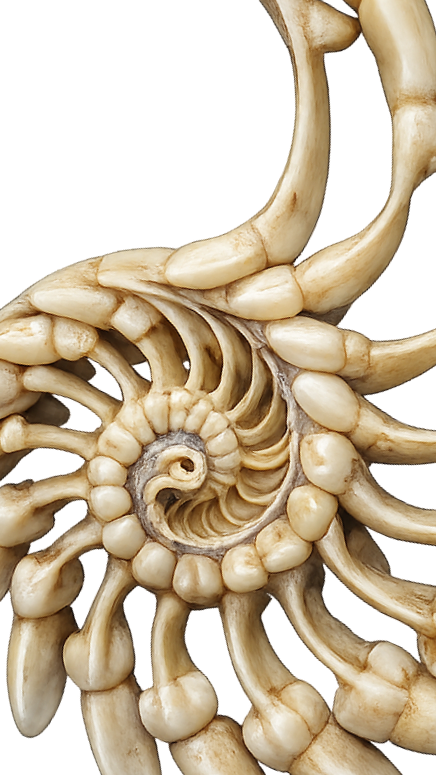
As for the band’s name, Vellum Nautilus was chosen as a reflection of the band’s belief that music should endure long after the final note has faded. Vellum evokes the permanence of the written word, recalling the ancient pages upon which humanity preserved its greatest ideas, stories, and discoveries for generations yet to come. The nautilus embodies a different but equally timeless form of preservation, carrying every stage of its life within the ever expanding chambers of its shell as it continues its quiet journey through an immeasurable ocean. Together these two symbols express a shared philosophy that every song, every performance, and every passing season should become another lasting chapter rather than a replacement for what came before. Like the chambers of the nautilus, each creative work is intended to build upon the last while honoring its foundation, and like words carefully committed to vellum, each composition is created with the hope that it will continue to resonate long after its creators have stepped away. The name therefore became more than an identity. It became a promise that their music would strive to preserve moments, memories, and emotions with the same quiet endurance found in nature and history, inviting listeners to discover not simply a collection of songs but an ever growing archive of human experience carried forward one chapter at a time.
So, the band officially formed in 2138 in the floating arcology district of New Rotterdam. None of the five founders intended to start a band. Their first meeting happened during a citywide power failure caused by an orbital solar storm that disabled nearly every entertainment network for three days.
With most electronic systems offline, local community centers opened their doors to anyone needing shelter, food, or something to occupy the silence. One room contained nothing except old acoustic instruments stored for educational programs. Five strangers wandered into the room over the course of an afternoon. Lyra Sato arrived first, quietly repairing an aging keyboard whose power supply had failed. Mara Quinn found an abandoned rhythm guitar hanging on a wall and began absent-mindedly playing chords. Signe Volkov, carrying a bass she’d been transporting across the city, joined simply because someone finally knew the same songs. Nadia Mercer borrowed a worn drum kit that looked older than everyone in the room combined. The last arrival was Evelyn Rojas, who asked one question:
“Mind if I make this louder?”
She picked up the lead guitar. No introductions. No rehearsal. No plan. The five women played continuously for nearly six hours while hundreds of displaced residents gradually filled the building. When electrical service returned that evening, no one left. People remained sitting on the floor long after the final chord faded. By the following week, recordings of that improvised performance had spread across local mesh networks. The women met again. Then again. Three months later they signed their first independent recording contract.

Unlike most artists who slowly changed styles over decades, Vellum Nautilus deliberately reinvented themselves every album. Fans never knew what the next release would sound like. Record labels repeatedly begged them to repeat successful albums. They never did. Ironically, this unpredictability became their signature. Their concerts routinely sold out within minutes. Despite eventually becoming one of humanity’s largest touring acts, they remained independently owned throughout their career. No member was ever replaced. No hiatus occurred. No public feuds emerged. For thirty-three years they remained exactly the same five musicians.
What has always stood out in the band’s history was the famed “war concert”. In 2162, while touring the Republic of Karsk, civil war erupted only days before the scheduled performance. Military authorities advised immediate evacuation. The band refused. They argued that the festival audience had already spent weeks traveling through dangerous territory to attend. The concert proceeded beneath emergency lighting inside a partially reinforced civic arena. Throughout the recording, distant artillery can occasionally be heard between songs.
No attempt was made to remove the sounds during mastering. The album became one of history’s most respected live recordings—not because of technical perfection, but because it captured thousands of people choosing music over fear for one evening. Mara and Nadia wed weeks after the album’s release.
By the late 2160s the members had become almost inseparable. They celebrated birthdays together. Raised children together. Spent holidays together. Crew members often joked that they had stopped being coworkers decades earlier. They had become sisters.
Fans expected another reinvention. Instead… everything stopped.
During preparation for what would become their nineteenth studio album, Nadia Mercer failed to appear for rehearsal. That had never happened. She apologized. Said she had simply been tired. Within weeks she was forgetting arrangements she had played for twenty-five years. Then entire rehearsals. Then conversations. Medical evaluations confirmed an aggressive neurodegenerative condition that medicine could slow but not reverse. She insisted the band continue. The others refused. Record labels proposed replacement drummers. Fans suggested guest performers. Past record album release artist partners. Every offer was rejected. Mara answered every proposal with the same sentence.
“There isn’t another drummer. There’s only Nadia.”
The five met privately for nearly twelve hours before releasing a single public statement. It contained only sixty-one words.
We began as five strangers who accidentally became a family.
We promised each other that Vellum Nautilus would never survive one of us.
We intend to keep every promise we ever made.
No farewell tour followed. No reunion announcements. No secret recruitment plans. No replacement. No final publicity campaign.
Only silence.

Months later, a small recording surfaced. It was never intended for release. Someone from the studio staff had accidentally left a room microphone recording after rehearsal ended. The members believed everyone else had gone home. The tape contains no music. Only conversation. They laugh. Tell old stories. Debate over beloved fan stories. Someone opens a bottle. Someone else complains about getting older. Near the end, Nadia quietly says,
“Promise me you won’t become four people trying to remember five.”
Nobody answers immediately. Several seconds pass. Then chairs scrape across the floor. One after another, you can hear each member walking over to embrace her. The recording ends. No one ever explained who switched it off.
Nadia Mercer died four years later. She was 47 years of age. Nadia was survived by her devoted spouse Mara Mercer and beloved daughter Quinn June Mercer. The remaining four women never performed another song publicly. Never mentored new budding artists. Every anniversary of the band’s formation, they continued meeting privately. The location was never disclosed. The only confirmed tradition was that five chairs were always placed around the table. One remaining empty.
Decades later, music historians debated which album was their masterpiece. Their fans worldwide almost universally gave the same answer.
“The band was”
Because for the first time in thirty-three years…there wasn’t going to be another tour or a new song. The truth of the matter is, there never was a band like Vellum Nautilus, before or after.