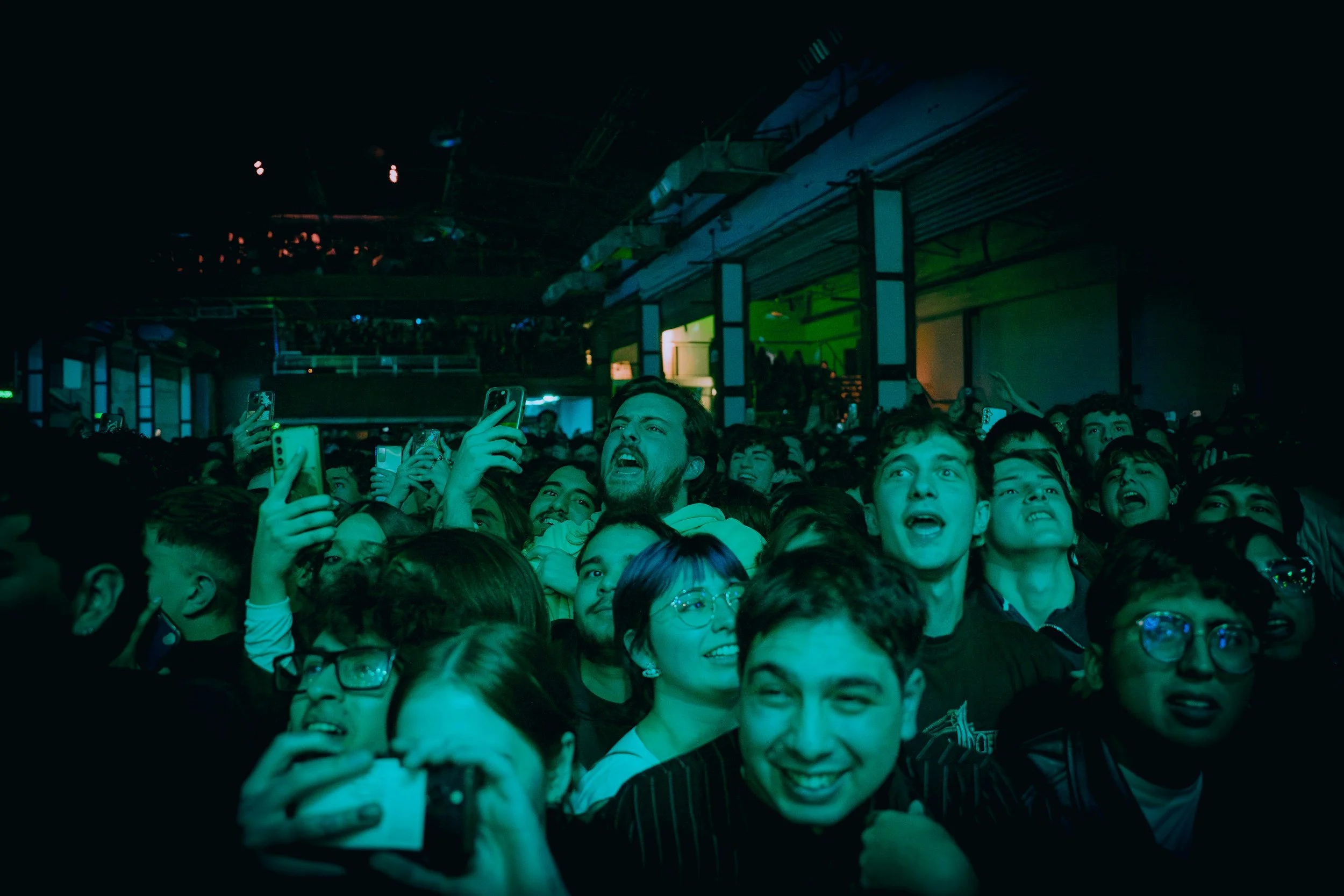
The Fan Following
Over the course of Vellum Nautilus' thirty-three-year career, its most devoted supporters gradually adopted the affectionate nickname "Naut-Heads." No one has ever been able to determine exactly when the term first appeared. Like many traditions surrounding the band, it seemed to emerge organically, spreading from fan to fan until it became a universally accepted part of the band's culture.
Although outsiders occasionally described the community as "cult-like," longtime followers generally embraced the comparison with good humor. The Naut-Heads developed a reputation for extraordinary dedication, elaborate traditions, and an almost endless capacity for creativity. What could have easily become an embarrassing label instead evolved into one of the most celebrated and enduring aspects of the band's legacy.
Perhaps the most recognizable Naut-Head tradition was the creation of handmade hats.
At some point early in the band's history, fans began presenting individually crafted hats to members of Vellum Nautilus. No two were alike. Some were beautifully stitched works of craftsmanship, others intentionally bizarre, and many seemed to defy any conventional understanding of fashion. A surprising number proudly declared themselves to be the "Original Naut-Head Hat," despite the obvious impossibility that thousands of completely different hats could all make the same claim. Rather than discouraging the tradition, the band enthusiastically embraced it.
Throughout their career, one member—or sometimes the entire band—would unexpectedly appear onstage wearing whichever fan-made hats happened to accompany them on tour. Concertgoers never knew what might appear next. It became a beloved running joke that was never announced, never explained, and never repeated in quite the same way twice. The members openly laughed at the Naut-Head nickname, but always in the unmistakable spirit of affection. Their playful self-awareness only strengthened the bond between band and audience. An unwritten understanding eventually developed among fans: once a hat had been personally given to a member of Vellum Nautilus, it would never be discarded.
Over the decades, the collection reportedly became so enormous that, in various interviews, the members jokingly admitted they had each been forced to dedicate entire rooms in their homes solely to storing the ever-growing mountain of fan-made headwear. Whether those rooms resembled carefully curated museums or delightful explosions of fabric, foam, glitter, feathers, cardboard, yarn, and impossible engineering has remained a matter of cheerful speculation.
Adding further credibility to the legend were countless candid photographs captured throughout the band's career showing members unexpectedly wearing unusual homemade hats while going about everyday life. Whether leaving airports, walking city streets, attending unrelated events, or simply being spotted in public, the hats would occasionally reappear without explanation—often to the delight of fans who immediately recognized them from earlier concerts or fan gatherings.
The hats, however, represented only one expression of Naut-Head culture. Independent fans also created an astonishing variety of shirts, artwork, patches, pins, banners, stickers, jackets, and countless other unofficial memorabilia proudly bearing the Naut-Head name. Some items were exchanged between friends, while others were produced in surprisingly large quantities and sold within fan communities around the world.
Neither the band nor its record label officially produced or licensed these creations. Remarkably, Vellum Nautilus consistently refused to discourage the phenomenon. Whenever asked about the growing unofficial merchandise, the band's response remained largely unchanged throughout the decades: creativity was something to be encouraged rather than restricted. They expressed little interest in policing what fans chose to invent, believing that genuine enthusiasm was far more valuable than ownership of an idea. Even when confronted with particularly strange, questionable, or downright ridiculous fan creations, the band maintained its lighthearted acceptance, often responding with amusement instead of criticism.
That philosophy became one of the defining characteristics of the relationship between Vellum Nautilus and its audience. Rather than treating the boundary between artist and fan as something rigid, both sides participated in an ongoing exchange of imagination, humor, and shared traditions that continued to evolve over three decades.
As the community expanded internationally, Naut-Head gatherings became increasingly common. Informal local meetups eventually grew into organized annual events, regional celebrations, and fan-run festivals dedicated entirely to the music and culture surrounding Vellum Nautilus. Many featured tribute and cover bands performing the group's songs, fan art exhibitions, homemade merchandise exchanges, costume contests, and, unsurprisingly, extraordinary displays of handcrafted hats. These events developed their own traditions while remaining united by the same welcoming spirit that had defined the fan community from the beginning.
Despite their remarkable devotion, Naut-Heads earned a reputation for being unusually inclusive. New listeners were welcomed with enthusiasm, longtime fans delighted in introducing others to decades of shared traditions, and the community generally viewed participation as something to be celebrated rather than earned. Wearing an absurd homemade hat was never considered a requirement—but it was widely understood that doing so dramatically increased one's chances of making new friends.
By the conclusion of the band's thirty-three-year career, the Naut-Heads had become far more than simply a fan club. They represented an international creative community whose traditions had developed almost entirely from the imagination of the fans themselves. Through humor, craftsmanship, generosity, and a willingness to laugh alongside the very musicians they admired, the Naut-Heads became one of the most distinctive and affectionately remembered fan cultures ever to surround a musical act.
In the end, the nickname endured for the same reason it had survived for decades: everyone—fans and band alike—understood that it had always been a joke made with love.